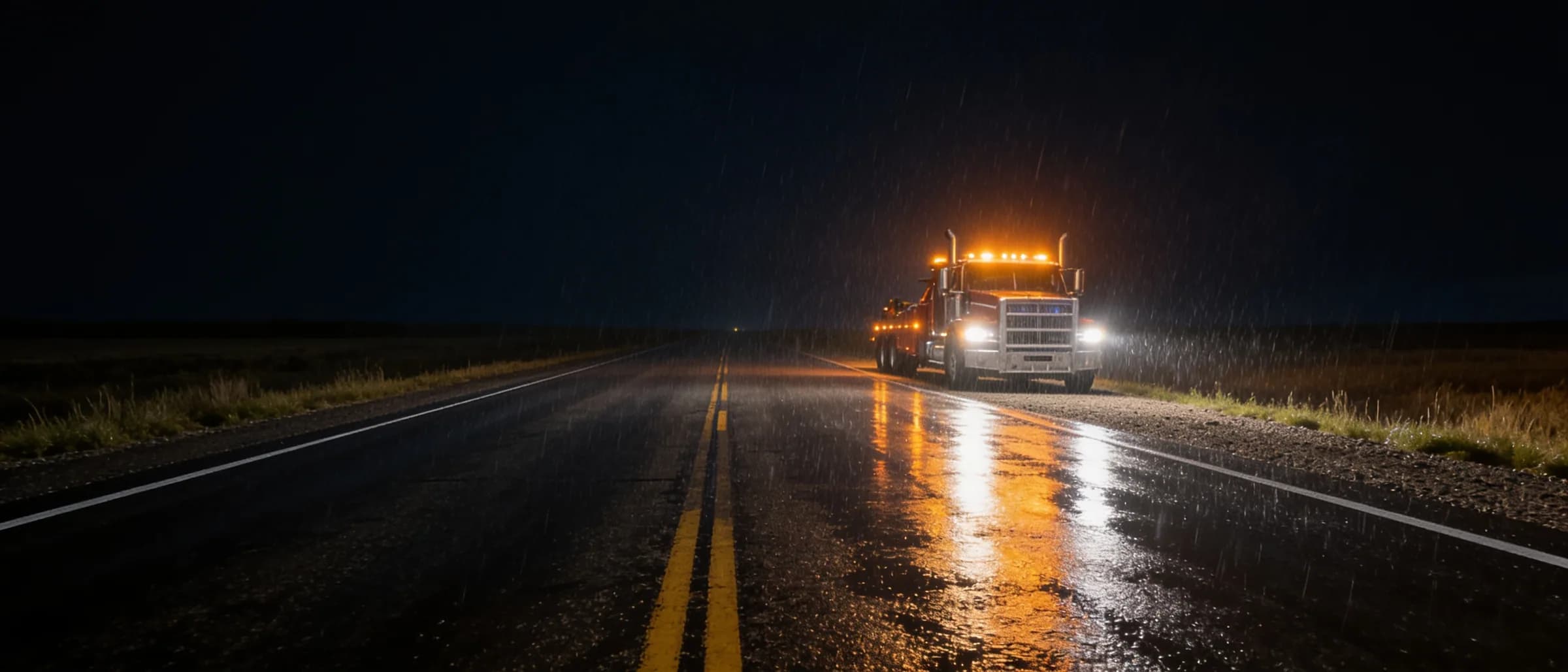
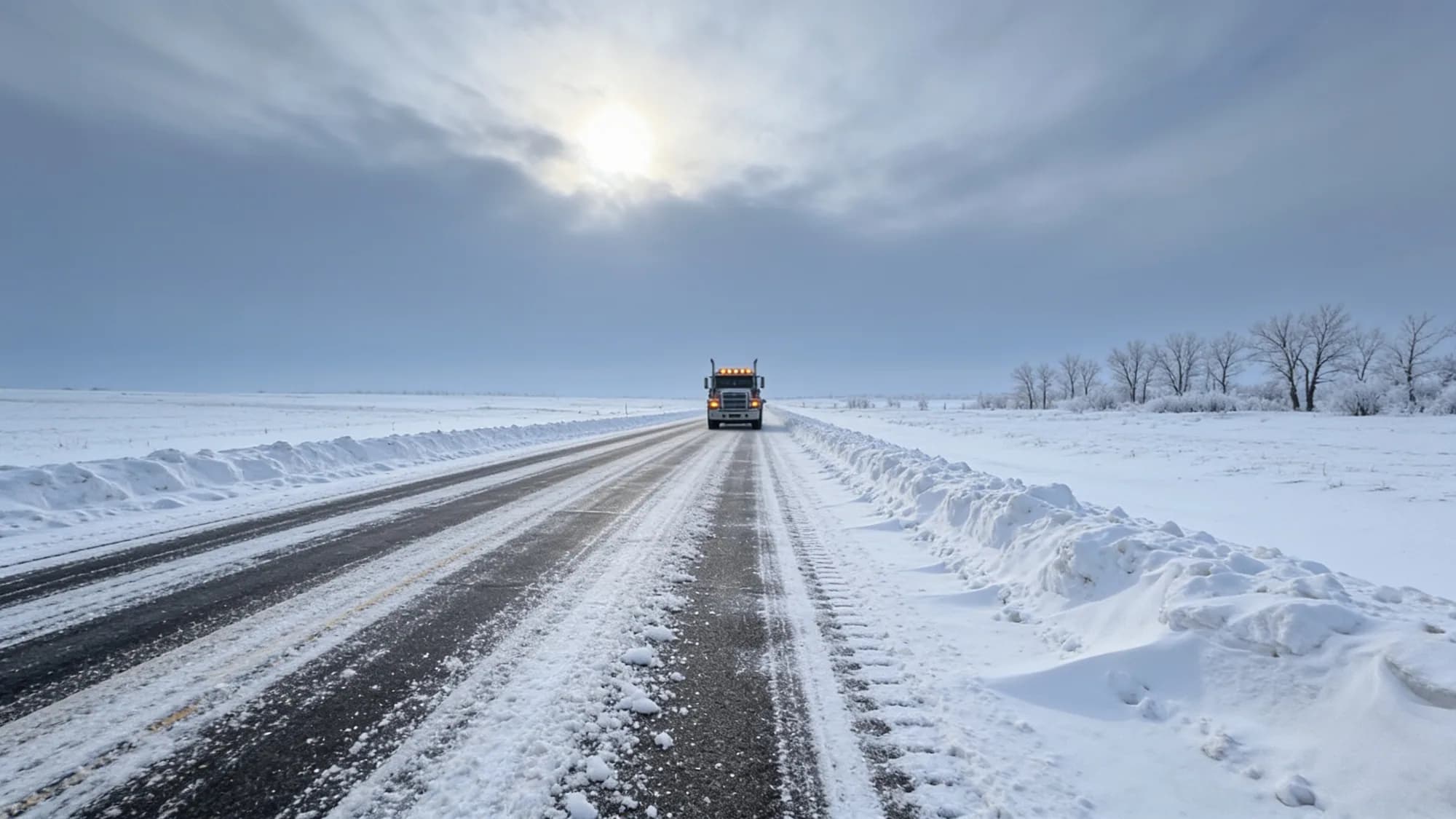
Ask people what causes winter breakdowns in Alberta and they describe a blizzard. In practice, the blizzard days are quieter than you would think — people stay home.
The call volume spikes on the first hard cold snap, and again during chinook cycles. Both are predictable, and most of what fails is predictable too.
The four things that actually strand people
1. Batteries
This is the big one, and it is not close.
Cold does two things at once. It thickens your engine oil, so the starter has to work harder, and it reduces the chemical output of the battery, so there is less power available to do it. A battery that was quietly weak in October fails completely at −25°C.
If your battery is more than three years old, have it load-tested before winter. Not a voltage check — a load test. The difference matters: a battery can show a healthy resting voltage and still collapse under cranking load.
The first genuinely cold morning of the season is our busiest boost day every single year, and almost every one of those batteries was already failing.
2. Tires
All-season tires begin hardening around 7°C. Below that they lose grip progressively, no matter how much tread is left.
This is the mechanism behind the single most common winter call: a vehicle with perfectly legal tires that slid on a road that looked fine. The driver is usually baffled, because nothing was wrong with the tires in the sense they understood.
Winter tires use a compound engineered to stay pliable in cold. On a rear-drive vehicle or a half-ton with an empty box, the difference between all-seasons and winters is not marginal — it is the difference between stopping and not.
3. Fuel
Two separate problems wear the same coat.
Gasoline vehicles: condensation in a near-empty tank freezes in the lines. Keeping the tank above half through winter largely eliminates it.
Diesel vehicles: untreated diesel gels in extreme cold, clogging filters and stopping the engine. If you run diesel through an Alberta winter, winter-blend fuel and an anti-gel additive are not optional extras, and a spare fuel filter in the truck has saved many people a very long wait.
4. Chinook ice
This one is specific to our part of the world and it catches even lifelong Albertans.
A chinook pushes temperatures above freezing, snow and ice melt, water runs across the road surface — and then the temperature drops back overnight. The result is black ice on a road that looks completely dry, often in bright sunshine.
The dangerous spots are the ones that shed heat fastest: bridge decks, overpasses, shaded cuts, and north-facing slopes. Around Calgary, the Highway 1A descent into Cochrane earns its reputation during exactly these cycles, and the Deerfoot overpasses produce a run of calls every chinook weekend.
What to carry
Not a survival kit. Just enough to be comfortable for two hours, because in genuinely bad conditions every truck in the region is already committed and a realistic wait is longer than usual.
- A blanket, a toque and gloves — in the cabin, not the trunk
- A charged power bank
- A flashlight
- Something to eat
- Boots, if you commute in shoes
If you do break down
Get off the driving lane if the vehicle is still moving. Use the momentum you have — aim for an approach, a pullout, a wide shoulder. Fully off the pavement is far safer than half in a lane, even if it means driving a few hundred more metres on a flat.
Hazards on immediately. In blowing snow, that is not enough on its own — if you carry triangles, set them well back.
Before you run the engine for heat, check that the exhaust pipe is clear of snow. A blocked pipe pushes carbon monoxide into the cabin. Run it in ten-minute intervals rather than continuously.
Then call, and have your location ready. See what to tell dispatch when you call a tow truck for the 30-second version that gets a truck moving fastest.
Where winter goes wrong around Calgary
Some locations produce calls every year, reliably:
- Highway 1A into Cochrane — the descent, in freezing rain or after a chinook refreeze
- QEII north of Balzac — ground blizzards close visibility with no warning on an open, exposed road
- Trans-Canada west towards Canmore — conditions change with elevation; clear in Calgary can be snowing at Scott Lake Hill
- Highway 2 south of Aldersyde — exposed, and drifting puts vehicles in the ditch rather than on the shoulder
- Deerfoot overpasses and bridge decks — first to ice, last to be obvious
None of these are surprising to anyone who drives them. They are worth knowing anyway, because the useful thing about a predictable hazard is that you can slow down before it rather than after.
The honest summary
Winter does not really break vehicles that were in good order in October. It finds the battery you were going to replace, the tires you were going to change, and the fuel treatment you meant to buy.
Deal with those three in autumn and most of this article stops applying to you.