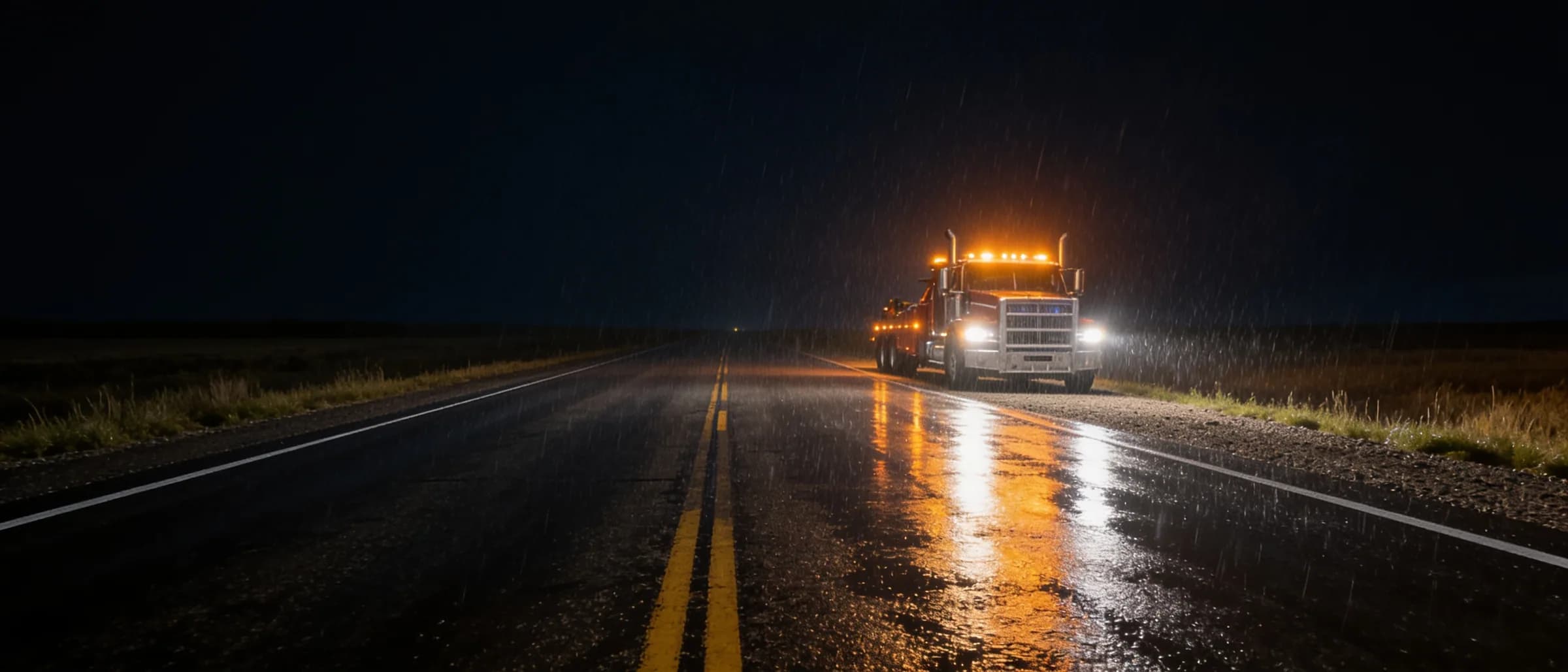
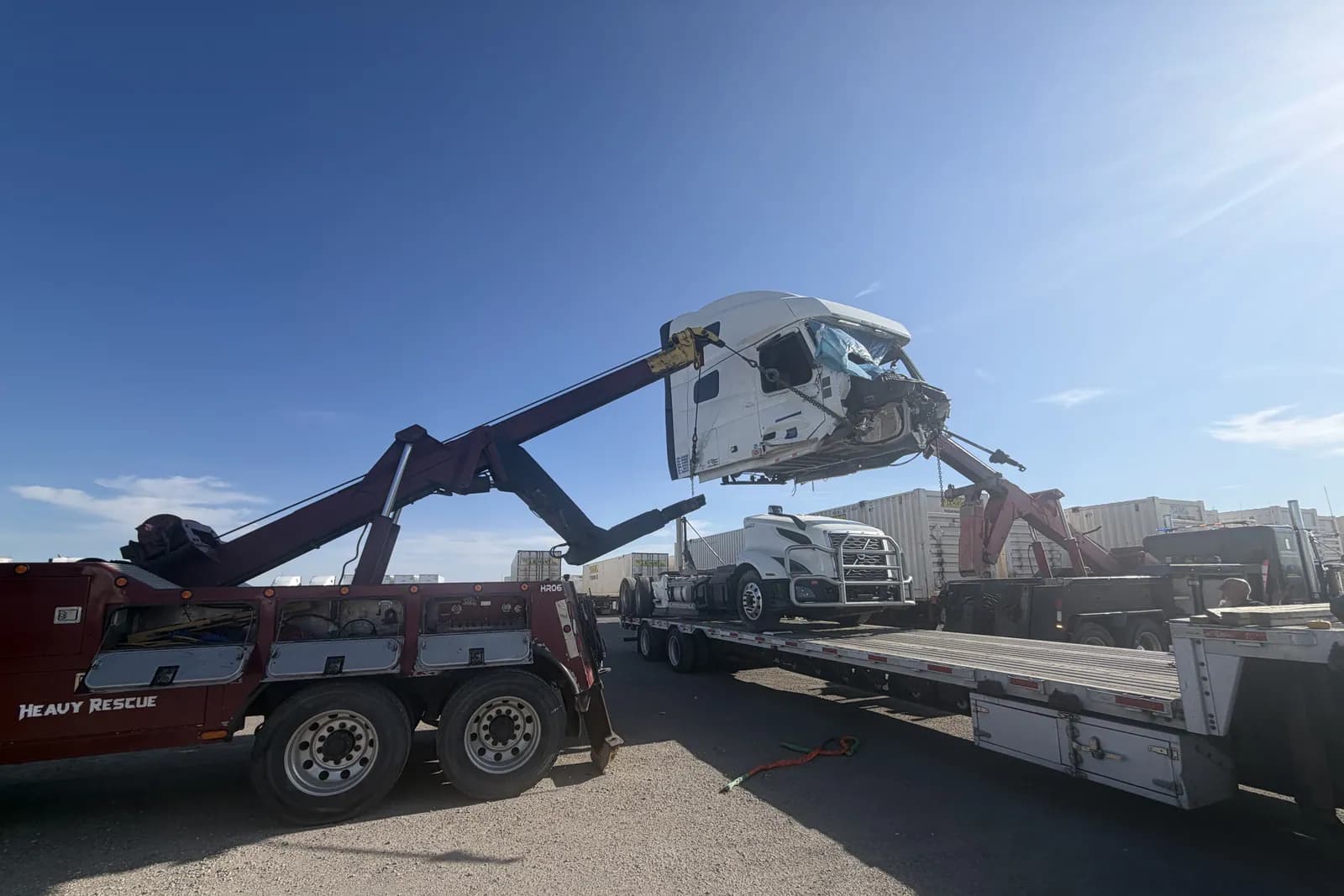
Most people's mental model of recovery is a big truck with a big winch pulling something heavy. The winch is real. The pulling is maybe ten percent of it.
Here is what the hours actually go on when a loaded highway tractor leaves the road.
First: nobody touches anything
The first phase is assessment, and rushing it is how recoveries go wrong.
Is the scene safe? Live traffic passing a working recovery at highway speed is the single biggest danger to everyone present — more than the load, more than the equipment. Lane closures, traffic control and positioning come before any rigging.
What is the vehicle doing? A unit is stable or it is not. Something resting against a fence, a bank or another vehicle may be held in place by that thing and may move unpredictably when it is removed.
What is in the trailer? Weight matters, but distribution matters more. A shifted load changes the centre of gravity, and a trailer that looks like a routine upright can be genuinely unsafe until the load is dealt with. Hazardous goods bring their own requirements.
What is the ground? Soft shoulder, ditch fill, frozen crust over mud, spring gumbo. Ground condition decides where the recovery units can position and whether they can anchor without becoming stuck themselves.
Then: the plan
Recovery is largely a geometry problem — angles, anchor points and sequence.
Where do the pull lines attach? Frame points, designated recovery points, sometimes axles. Attaching to the wrong thing tears it off, which turns one problem into two.
From what angle? Pull direction determines whether a unit rights itself or rolls further. On a side-lying tractor, the difference between a controlled upright and a second rollover can be a matter of degrees.
In what order? Sometimes the trailer is dealt with first. Sometimes the load comes off before anything moves. Sometimes a second unit is needed purely to stabilise while the first pulls.
What is the failure mode? Experienced operators plan for the line letting go, because lines do. Everyone's position on scene reflects that.
Then, briefly: the pull
Done properly, with the rigging right and the angles right, this part is often undramatic and quick. That is the mark of a good recovery, not a dull one.
The drama people picture — straining, slipping, sudden movement — is generally evidence that something upstream was not planned well enough.
Afterwards
The unit still has to go somewhere. It is usually undriveable, sometimes missing wheels or steering, and it has to be loaded and hauled to a yard or a shop.
The scene has to be cleared: debris, fluid spill, cargo. A recovery that leaves a lane covered in diesel has not finished.
And it has to be documented, because the invoice reflects hours and equipment rather than distance, and everyone downstream — carrier, insurer, sometimes lawyers — will want to know what was deployed and why.
Why it is quoted per job
A light-duty tow is priced on hook-up plus kilometres because the work is predictable.
Recovery is not. The same rolled tractor takes two hours on a dry, flat shoulder in June and most of a day in a wet ditch in April with a shifted load and a single lane of live traffic. Distance is barely a factor; hours and equipment are everything.
This is also why nobody honest will give you a firm number for a recovery sight-unseen. What you should get is a clear explanation of how it is charged and an assessment as soon as someone is on scene.
What it takes to do it
Heavy recovery needs equipment most towing companies do not own — rotators or heavy wreckers with sufficient boom and winch capacity, rigging rated for the loads, and enough units to stabilise as well as pull.
It also needs operators who have done it before. The judgement calls in the assessment phase are not in a manual, and the cost of getting them wrong is measured in second rollovers and torn-off frame rails.
That is the honest reason a lot of towing companies sub this work out. There is nothing wrong with that — but it does mean you are waiting for someone else's truck, and paying for the coordination.
Around Calgary
The recoveries we see most often come from predictable places: the Trans-Canada east towards Strathmore where crosswinds catch high-sided trailers, the QEII in ground blizzards, the grades west into the Bow Valley where brakes cook on the descent, and off lease and range roads in spring melt.
None of that is exotic. It is just Alberta, and it happens every year.
If you run commercial units through this region, the useful thing is to have a number in the truck before you need it — ours or somebody's. The worst time to choose a recovery contractor is while standing in a ditch.